Showing posts with label Internet. Show all posts

Sunday, January 25, 2026

Justdial’s Google Monopoly: How SMEs Lose Visibility

Picture this: you’re craving biryani at midnight in Chennai. You type “best biryani near me” into Google, expecting to see restaurant websites or maybe a Google Maps pack. Instead, the top results are Justdial ads, followed by Justdial’s directory pages. You click, only to find yourself scrolling through a cluttered list of restaurants—some outdated, some irrelevant, and many paid placements.

This isn’t an isolated annoyance. Across India, Justdial has turned Google’s local search into its playground, leveraging aggressive ad buys and SEO dominance to intercept traffic. For small and medium enterprises (SMEs)—restaurants, salons, electricians, tuition centers—this creates a chokehold. Customers searching for them directly often land on Justdial first, where leads are monetized, reviews manipulated, and visibility sold back to the very businesses that were searched for.

This article dives deep into how Justdial enforces this dominance, why it hurts SMEs and users, and what can be done to restore fairness in local search.

The Rise of Justdial’s Search Dominance

Justdial’s story is often told as a startup fairy tale: founded in 1996, it grew from a telephone directory service into India’s largest local search engine. But behind the success lies a strategy that has reshaped how Indians discover local businesses online.

  1. Paid Ads Flood the SERP: Justdial spends heavily on Google Ads, ensuring its listings appear above organic results. For example, a search for “AC repair in Bangalore” often shows 3–4 Justdial ads before any actual service provider website. This creates a pay-to-play funnel where SMEs must either pay Justdial for leads or risk invisibility.
  1. SEO-Optimized Directory Pages: With over 36.5 million listings (Smart Investor Digest, 2024), Justdial’s directory pages are keyword-rich and structured to rank. A restaurant’s own website may have 10–15 pages, but Justdial creates hundreds of city-specific, service-specific pages that dominate long-tail queries like “best veg restaurant in Andheri.”
  1. Scale as a Weapon: Justdial’s 100M+ unique visitors per quarter (Business Rule, 2024) give it unmatched domain authority. Even if one listing doesn’t rank, another will. SMEs, with limited budgets, simply can’t match this scale.
  1. Brand Hijacking Through Listings: Search for “Annapurna Sweets Kolkata official website,” and chances are Justdial’s page for Annapurna appears before the actual site. This hijacks branded intent—traffic meant for the business is rerouted through Justdial’s monetized funnel.

Justdial’s Google Monopoly: How SMEs Lose Visibility

How Justdial Hurts Businesses and Users

While Justdial’s dominance looks like clever marketing, the real-world consequences are damaging.

  1. SMEs Lose Direct Visibility

Take the case of Ramesh, who runs a small AC repair service in Hyderabad. Despite building a website and optimizing it, he found that most of his leads came through Justdial. But here’s the catch: Justdial charged him ₹500 per lead, even when customers had searched for his business name directly. Essentially, he was paying to access his own customers.

  • SMEs invest in websites but remain invisible.
  • Leads are intercepted and resold.
  • Acquisition costs rise, squeezing margins.
  • Dependency on Justdial grows, reducing autonomy.
  1. Users Get Misleading Information

Delhi-based restaurant owner shared that Justdial continued showing an outdated phone number even after multiple correction requests. Customers called, got no response, and assumed the restaurant was closed. Meanwhile, competitors who paid for premium listings appeared higher.

  • Paid listings override accuracy.
  • Outdated info frustrates users.
  • Customers may choose irrelevant businesses.
  • Trust in Google’s SERP erodes.
  1. Fake Reviews and Manipulated Leads

Multiple SMEs allege that Justdial adds fake reviews or sells leads to competitors. For instance, a salon in Pune reported receiving calls from “leads” that turned out to be fake numbers—yet they were billed for them.

  • Fake reviews distort reputation.
  • Leads may be recycled or fake.
  • SMEs pay for low-quality traffic.
  • Trust deficit grows among users.
  1. Google’s Search Experience Gets Diluted

Google’s mission is to provide the most relevant information. But when SERPs are dominated by one aggregator, the experience feels spammy. Instead of empowering users, it funnels them into a middleman ecosystem.

Case Studies: Real-World SME Impact

Case Study 1: Restaurant in Bangalore

A mid-sized restaurant in Indiranagar invested in a sleek website and Instagram marketing. Yet, when customers searched “Indiranagar North Indian restaurant,” Justdial’s page ranked first. The restaurant’s own site was buried on page 2. Result? 70% of online reservations came via Justdial, which charged per lead.

Case Study 2: Electrician in Chennai

An independent electrician reported that 90% of his calls came through Justdial, but half were irrelevant (wrong location, fake numbers). He still had to pay per lead. His own Google Business Profile, though optimized, was overshadowed by Justdial’s ads.

Case Study 3: Tuition Center in Delhi

A coaching center owner noticed that when parents searched for his institute by name, Justdial’s listing appeared first. Parents often called through Justdial, and the institute was billed for each inquiry—even though the parents had intended to contact them directly.

Solutions to Break the Monopoly

The good news? SMEs aren’t powerless. With the right strategies, they can reclaim visibility.

  1. Google Must Enforce Fair Play
  • Crack down on ad spamming by directories.
  • Ensure branded searches prioritize official sites.
  • Improve transparency in ad labeling.
  • Penalize platforms with fake reviews.
  1. SMEs Should Optimize Google Business Profiles
  • Add accurate details, photos, and services.
  • Collect genuine reviews from customers.
  • Post weekly updates to stay active.
  • Use UTM links to track GBP traffic.
  1. Invest in Local SEO Strategies
  • Create city-specific landing pages.
  • Use schema markup for services and reviews.
  • Publish experience-driven content (case studies, FAQs).
  • Target long-tail local keywords.
  1. Educating Users to Go Direct
  • Promote official websites on receipts, menus, and WhatsApp.
  • Offer discounts for direct bookings.
  • Run campaigns: “Book direct, save more.”
  • Build loyalty programs outside aggregators.

Table: Justdial vs Direct Business Listings

Factor

Justdial Listing

Direct Business Website

Control

Limited, dictated by Justdial

Full control over content & branding

Cost

Paid leads, premium listings

One-time website + SEO investment

Accuracy

Often outdated or manipulated

Always updated by the business

Trust

Mixed (fake reviews, ads)

Higher trust with verified info

My final thoughts

Justdial’s dominance in Google search isn’t just a quirk—it’s a systemic issue. By flooding SERPs with ads and hijacking brand searches, Justdial has turned discovery into dependency. SMEs lose visibility, users lose trust, and Google’s promise of relevance is compromised.

But the tide can turn. With Google enforcing fairer ad practices, SMEs doubling down on local SEO and Google Business Profiles, and users learning to go direct, the monopoly can be broken.

The internet was built to connect people with information—not gatekeep it behind paid walls. The question isn’t whether Justdial will keep dominating—it’s whether Google and SMEs will step up to reclaim the search experience.
Sunday, April 27, 2025

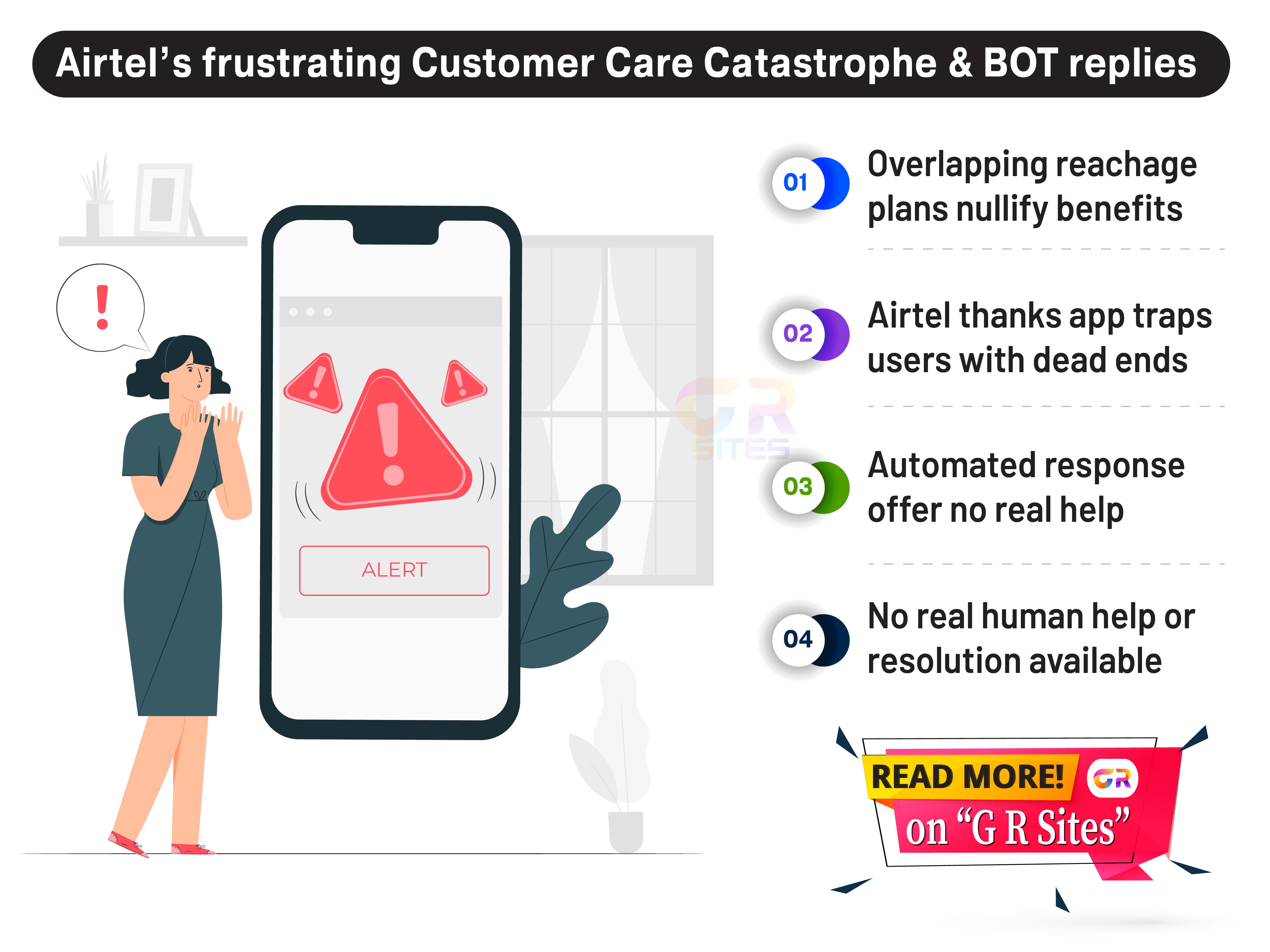
Tackling Airtel Recharge Problems: Face Inefficient Bot Support

It started as an ordinary day—until a simple recharge turned into a full-blown debacle. In my haste, I mistakenly recharged my Airtel mobile number with an incorrect plan of ₹489 (77-day validity) that directly overlapped with an active plan spanning 84 days. Almost immediately, a sinking feeling set in as I realized the error could cost me both money and precious time. What followed was a labyrinthine journey through an automated complaint process, unresponsive customer care, and shocking hidden charges. This blog post unravels every frustrating twist, offering insights, comparisons, and advice for anyone caught in a similar predicament. Read on as I recount my experience with unwavering honesty, detail by detail, to help you navigate the murky waters of telecom customer service. After all, when a simple mistake evolves into a saga of poor support, it’s essential to shine a light on the gaps that can leave loyal subscribers feeling helpless and scammed.

Today’s digital services trump convenience, but they often come at the cost of genuine human support. Will these streamlined systems ever be refined to value the customer’s time and money, or are we destined to face endless loops of automated responses? Let’s dive deep into my experience, break down the stages of frustration, and uncover what went wrong—from the initial accidental recharge to the disappointment of ineffective customer support. By examining this ordeal, we can better arm ourselves against similar predicaments and encourage service providers like Airtel to enhance accountability and responsiveness in their customer care frameworks. In the sections below, I share an in-depth analysis of each phase of this saga, supported by detailed comparisons and insights to help you make informed financial decisions when it comes to navigating such issues in telecom services.

Tackling Airtel Recharge Problems

The Accidental Recharge: A Costly Error

Sometimes life surprises you with an unexpected twist, and in my case, it came in the form of a recharge mishap. A momentary lapse—a click in haste—unleashed a cascade of unintended consequences. What began as a routine transaction morphed into an ordeal filled with overlapping plans and financial losses. This section takes you through that initial stage: the moment I realized the error, the surrounding chaos of overlapping plans, and how the gravity of the situation set in. Every detail matters, especially when a service you trust turns out to be less than reliable.

  • Mistaken Recharge: The Beginning of a Frustration It all began with an unexpected tap on my phone as I inadvertently selected an incorrect recharge plan. Amid my hurried routine, my oversight led me to choose a ₹489 plan that overlapped with my active plan, throwing me into a vortex of mounting anxiety. In that instant, a sense of dread overcame me as I realized the monetary slip-up could result in complex ramifications. This inadvertent act set the stage for what would evolve into a prolonged struggle with customer support and mounting financial loss, leaving me questioning if errors can truly go unrectified without causing any irrevocable damage.
  • Overlapping Plans and Unintended Consequences The costs compounded quickly when I discovered that the new plan not only overlapped but also nullified several benefits of my existing active plan. The redundancy meant not only wasted funds but also confusion over which plan’s benefits would ultimately apply. This overlap sowed chaos, as two sets of terms and conditions collided, leaving me in a paradox of unredeemed rewards and duplicated validity periods. The dual activation complicated billing cycles and obscured data entitlements, making it nearly impossible to untangle the financial intricacies. The unintended consequences were not merely administrative but had a direct impact on my user experience and overall trust.
  • Immediate Realization and Panic Reaction Within minutes of completing the transaction, I sensed something was terribly off. The real-time realization triggered a surge of panic and a desperate need to correct course before further damage could ensue. I immediately tried to cancel or rectify the recharge through the Airtel Thanks app, only to hit a wall of automated responses. It was as if the system was designed not to help but to prolong the problem by keeping me in an endless loop of unanswerable questions and generic suggestions. The instant I recognized the error, a flurry of adrenaline took over, spurring me to seek help before the mistake solidified into an irreversible financial burden.
  • Emotional and Financial Toll: A Deep Impact No one likes to feel duped, and the emotional toll of realizing that your hard-earned money may have been wasted is immense. The financial loss was clear, but so was the erosion of trust in a service provider that promised seamless support. As minutes turned into hours, feelings of frustration and helplessness dominated my thoughts. The nagging sensation of being ignored by an impersonal system further deepened my distress. Every moment spent trying to resolve the issue added layers of anxiety and disappointment, resulting in a profound sense of injustice. The emotional impact extended beyond the immediate inconvenience, seeping into my overall perception of the brand’s reliability and commitment to customer satisfaction.

Automated Frustration: Airtel Thanks App & Bot Woes

The allure of technology is its promise of instant support, but as I soon learned, automation sometimes creates more roadblocks than solutions. Navigating the Airtel Thanks app turned into an exercise in futility, where human empathy was replaced by cold, unhelpful algorithms. This section delves into how the automated system failed to address my urgent plea for a refund, leaving me stranded in a cycle of repetitive chatbot options and mechanical responses. Here’s what happened when I reached out for help only to face an inhuman, simplified digital maze.

  • Clunky Interface and Automated Options The Airtel Thanks app, designed to simplify customer service, instead presented a labyrinth of clunky, overly automated options. From the moment I logged in, I was greeted by a series of pre-set menus that left little room for nuance. The interface felt disconnected from the reality that many customers face—a one-size-fits-all approach that strips away any warmth or understanding. Each option was merely a gateway to an automated response that did nothing to solve my unique problem. The system, rigid and unyielding, showcased a stark contrast between digital promises and the genuine human interaction I desperately needed. This mismatch left me feeling more alienated than assisted.
  • Ineffective Chatbot Communication I engaged with the chatbot, expecting a quick fix or at least a friendly conversation to address my error. Unfortunately, the communication was frustratingly mechanical, filled with vague statements and canned replies that circled back to the same unresolved issues. The chatbot’s responses were nothing more than generic prompts, lacking the adaptability to handle a nuanced customer problem. Its inability to recognize the severity of my situation or to escalate the issue to a human representative left me in a loop of repetitive, unhelpful answers. The inadequacy of this digital interface revealed the real deficit in the customer service strategy, where empathy and problem-solving are sacrificed for robotic efficiency and cost-cutting.
  • Automated Complaint Process: A Dead End When I finally managed to register my complaint through the app, the process felt like pushing a complaint into a void. After multiple attempts and endless yes/no questions, I received a complaint number that signaled nothing more than a promise; it was a hollow gesture in a system designed to deflect responsibility. The automated process failed to offer any meaningful recourse or follow-up, leaving me to wonder if my issue was even being actively considered. The entire procedure was a dead end—a maze of automated steps that culminated in a number lacking context or urgency. This left me with the impression that my financial loss was merely another data point, unworthy of a real human intervention.
  • Absence of Human Intervention: A Sour Experience When the automated system inevitably left me stranded, my request for escalation to a human representative was met with further dismissal. Despite repeated pleas, I received only more automated guidance, telling me to use the same app for further assistance. The absence of any real human intervention or empathy was not only disappointing—it was infuriating. I felt like I was conversing with a wall, receiving identical, soulless responses no matter what route I pursued. This soured my overall experience with Airtel, revealing that beneath the veneer of modern technology lay a severely lacking support system, unprepared and unwilling to treat customers as individuals deserving genuine care and respect.

Inadequate Assistance: Customer Care Charges & Unmet Promises

When all attempts via the app failed, I took the plunge into contacting customer care directly. However, the reality of reaching out directly was even more disheartening. Instead of genuine assistance, I encountered a system that charged me for every minute of my time, coupled with empty assurances of a resolution that might come only after ten long days. This section recounts the painful navigation of experimental customer support channels where every conversation felt like hitting a brick wall—a place where promises are made but rarely kept.

  • Customer Support: Reaching the Virtual Wall I dialed the customer care number, hoping to break free from the automated mess, only to be confronted with a system that felt more like a barrier than a bridge to resolution. Despite my clear explanation of the issue, I encountered scripted responses that repeated like a broken record. The representative, bound by rigid protocols and unwilling—or unable—to offer any tailored help, left me feeling as if I were speaking to an unresponsive wall. Every interaction reeked of indifference, reinforcing the notion that behind the glossy façade of modern telecom services lay an archaic support system ill-equipped to handle uniquely human issues. This experience only deepened my frustration and sense of abandonment.
  • Exorbitant Call Charges and Hidden Costs Adding insult to injury, the call required a fee of Rs.0.50 per minute—a hidden cost that made each conversation feel like a financial sacrifice upfront. As I listened to the monotonous assurance that my issue would take ten days to resolve, I couldn’t help but feel that every extra minute was charging me not just money but also diminishing my trust. These calls, far from feeling like a channel for resolution, instead served as a deterrent, compelling customers to think twice before seeking help. The unexpected charges underscored a fundamental disconnect between customer expectations and the actual cost of support, leaving me to bear an unfair financial burden for what should have been a complimentary service.
  • False Promise of Resolution: Ten Days Delay During one particularly excruciating call, I was told the problem would be resolved within ten days—an assurance that felt both arbitrary and dismissive. The idea of waiting nearly two weeks for a resolution to what was clearly an avoidable error seemed ludicrous, and it only heightened my skepticism about Airtel’s commitment to its customers. Promises made without clear accountability or follow-up action were nothing short of false hope. The standard reply, void of any concrete solution or timeline beyond vague assurances, left me questioning the reliability of the service. It was a bitter reminder that, sometimes, empty words cost far more than just money—they erode trust and loyalty in the process.
  • Social Media Escalation: The Unhelpful Reply Frustrated beyond measure, I turned to social media in hopes of eliciting a prompt response from Airtel’s support team. Instead of finding a compassionate ear, I encountered yet another round of standard, automated replies. One such response bluntly stated that since the benefits were already credited, no reversal was possible—an answer that felt both canned and dismissive. This interaction on a public platform did little to alleviate my concerns but rather reinforced the notion that the company’s policies placed customers in a perpetual loop of unmet promises. The reliance on standardized replies on social media only deepened my sense of isolation and frustration, leaving me with the stark realization that my voice was lost in the echo chamber of corporate bureaucracy.

My Final thoughts

In reflecting on this tumultuous experience, it’s clear that a single accidental recharge morphed into a much larger issue—a striking example of how high-tech efficiency can sometimes come at the cost of basic customer decency. From the harsh reality of overlapping plans and immediate panic to the frustrations encountered with clunky automated systems and financially draining customer calls, every step of the process revealed a gaping void in reliable support. My journey through the maze of the Airtel Thanks app, impersonal chatbot responses, and exorbitant call charges is a cautionary tale for anyone who believes technology always supersedes personal assistance.

What struck me the most was the absence of genuine human intervention. Despite technological advances and promises of quick fixes through self-help tools, I found myself battling a system that was more interested in cost-cutting than in truly resolving customer issues. The automated responses, scripted apologies, and delayed promises not only failed to rectify the error—they left me disillusioned and questioning the very ethos of customer service in today’s fast-paced digital environment. It’s high time that telecom companies like Airtel rethink their approach: embrace human empathy alongside automation, ensure transparency in fees, and cultivate a customer-first attitude that doesn’t leave patrons feeling scammed when mistakes occur.

For consumers, this experience reinforces the need for vigilance. Double-check every transaction, keep records of your communications, and never hesitate to escalate an issue through the proper channels—whether it’s through social media, email, or even a formal complaint to a regulatory authority. Your voice matters, and it’s imperative that service providers are held accountable when their automated systems fail you. Let this serve as both a personal catharsis and a rallying call: we deserve support that is not just efficient, but also empathetic and responsive.

Friday, November 27, 2009

Resource for Mobile 4g Connection

In recent times the Internet has turned out to be the easier and smart way to have communication with your loved one. There are wide ranges of Internet service providers available in market that provider Internet access for consumers. But most Internet service providers available in market lack quality of support and high speed connectivity. So, make sure that you select Internet connection with high speed Internet connectivity and best customer support. The 4g is the new generation of high speed Internet connectivity available in market that provides average speed of 3-6 Mbps. The clear a wireless is one of the stand alone networks available in market that provides high speed Internet access for consumers. The Clearwireless mobile Internet offers you different features such as Video chat while you are in a cab, let your kids play online games in the car, download music and send e-mails at the park, wireless download speeds average between 3-6 Mbps, wireless Internet speeds as fast as you would get with a standard home broadband connection, you can stream live videos, download music, video chat and more - on the go, speeds are 4x faster than 3G and a lot more stuff included. For more information, please feel free to check out the above link.

Thursday, August 27, 2009

Hughes Net Information

If you feel frustrated about your dial-up or slow Internet connection, then satellite Internet service would be the best option. Most of the Internet service available out there in market may not provide satellite Internet service or they may not provide coverage in all rural places in the country. So, you must be cautious in selecting your Internet service. You may have known wide ranges of satellite Internet service provider available in market, but make sure that you select the best among them.

The hughs net is one of the stand alone satellite Internet service providers available in market. The Hughes Net provides coverage in most parts of the country. The satellite Internet service or speed is 50 times faster than your dial up connection. You can also get uninterrupted Internet connection from hughs net. The hughs internet provides high speed Internet connectivity and best customer service that no other competitor in its category can offer you. There are many ways to find exciting deals about hughs net and the easier way would be referring a high quality network like satelliteinternetbroadband.com. From satelliteinternetbroadband.com network you can get best and exciting deals and offers your hughs Internet service that no other competitor can offer you.